The Crowded Boardroom: When the long tail collides with hierarchy – a true story.

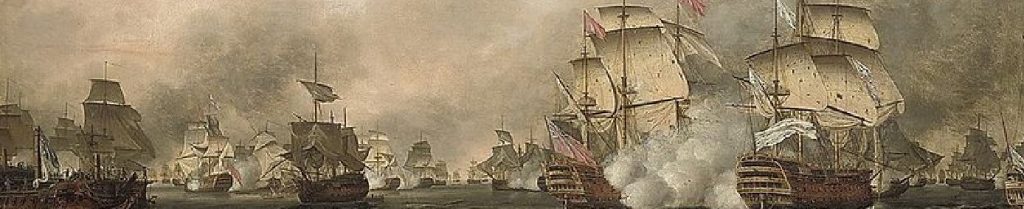
A painting of a naval battle from the 1700. Many sailing ships can be seen fighting with cannons.

This not a random picture, it is how I envision the government, the Canadian federal government. Each ship is a department or agency. The ships have commanders with considerable authority. Communication at a distance is very bad, (they did it with flags, we do it today with email and private conversations). Groups of ships are supposed to work together and sometimes they do, but collaboration is difficult with many strong egos and conflicting agendas. The current administration wants the public service to be more efficient and outcome focused, something I can very much agree with, but have also heard before.

The goal of this post is to try and share some of the lessons from an extraordinary experience that I and many others were part of some time ago. The experience was leading the collaborative tools team that created GCpedia and GCconnex across the Government of Canada (2007-2010).

This part of my professional journey began with the 2000 tech bubble burst and the ride that preceded it ended. Looking for new consulting challenges I looked to government and found a world of opportunity for improvement.  Over the next few years, I undertook dozens of interesting projects in a variety of departments that eventually led to a three-year executive interchange appointment that changed my life, and I dare say, changed the Government of Canada.

When my interchange ended, I realized that this was a career highlight that would be difficult to surpass. So I wrote a paper about it.  The paper reflects on the origin story of what is certainly one of the most successful government collaboration platforms in existence. In the paper, I look at how the project managed to transcend cultural and institutional barriers to change. My hope is that as we embark on the next round of public service renewal the lessons of the past will help improve our odds at success.

Reading it today I am struck by a few things:

we need to adapt

The world has changed a lot in the almost two decades since GCpedia was launched, but government has not. A Westminster system that has its roots in the days of sail, is still challenged by the concept of collective instantaneous communication, whatever will we do to adapt to the age of AI?

Executives need to understand the concept of complexity

Large organizations of people are complex adaptive systems and not enough senior executives know what that means. In a complex adaptive system, neither use nor content can be fully anticipated, this has serious implications for how we think about management of information, technology, people, policy and services.

CHange is hard

Introducing change to an organization requires a willingness to manage by exception —the long tail does not easily fit in a boardroom (page 20). A senior central agency executive who is willing to risk manage and lightly “govern” can enable wide-spread innovation.

stealth works

Formal approval mechanisms cannot be expected to understand and preemptively approve the specifics of innovation. A small group with sufficient “policy cover” and lean governance can sometimes achieve good enough for next to nothing.

Conflict of interest is real

Governance and funding models are something we should be looking at and talking about to deal with our shared accountability issue (see the governance description starting on page 13). Existing models have inherent barriers and conflicts of interest that should be acknowledged and addressed if we hope to make collective progress.

I would be delighted to hear your thoughts.

Here is the  PDF 

Here is the presentation to accompany the paper.

The icons in this post come from Peter Stoyko’s brilliant systemviz codex. The header image of the sailing ships comes from Wikipedia Battle of the Saintes which took place in the Caribbean of all places.

More articles and stuff.

Hold your breath, it’s going to go deep.

600px-Logo_legrazie_città_dei_palombariDecember 2013 Update:

The full paper is now available on the Articles page. 

June 24, 2013 Update:

Our paper submissions are complete, now I have to do is write the paper entitled: THE CROWDED BOARDROOM — WHEN THE LONG TAIL COLLIDES WITH HIERARCHY: A REAL LIFE EXAMPLE.   Should be interesting….

Hello,

I received the wonderful news the other day that our panel proposal for an academic conference was accepted.

Truth be known, I am only on the panel because I happen to know three guys with brains, and they were kind enough to invite me to join them. The proposal, (that I agreed to be part of), is below. I am posting this here in the hopes that one or two of you might give me some input and I think that would be cool.

————————————————————————–

The proposal:

The International Social Science Council’s 2nd World Social Science Forum, 13-15 October, 2013 in Montréal, Canada

Social Transformations and the Digital Age

Panel Theme: “Collaboration and Governance For a Digital Era”

Abstract

While technology is proving eminently capable of connecting us, will it be enough to help us overcome chronic human problems, especially given the leaning biases of our institutions and their precognitive commitments towards hierarchy, romanticized leadership, equality and individual freedom? What else may be needed?

Each of the bold words may be a focus for debate. Is technology sufficient to connect us? From what chronic problems do we need saving? What are our institutional learning biases and how do we overcome them? Has hierarchical organization passed its prime? Why is leadership increasingly inappropriate in environments of collaboration and partnership? What’s the matter with equality? Why our notions of ‘freedom’ must evolve in the context of our increasing degrees of interdependence?

What else? There is growing interest in rising above traditional management and administration models, which are often observed as limited and ineffective, and moving towards organizing concepts such as distributed governance, collaboration and partnership, stewardship, self-organization, and real democracy – processes that promote constant inquiry and learning, and the development of collective intelligence.

Are today’s digital challenges simply pushing us towards incremental institutional adaptation by projecting tomorrow’s digital environment onto yesterday’s institutions? Or, is the emerging digital environment and its domains of Big Data, ubiquitous information, social media and mass collaboration posing a revolutionary challenge to our existing institutional models to help us embrace, unfold and orchestrate our social potential?

Participants

  • John Verdon, Knowledge Management Lead, S&T Outlook, Defence Research and Development Canada. Title: Knowledge and Collaboration Governance for Social Computing, Responsible Autonomy, Network Individualism and Self-Programmable Organization
  • Christopher Wilson, Senior Research Fellow, Centre on Governance, University of Ottawa. Title: From Management and Leadership to Collaboration and Stewardship
  • Thom Kearney, Partner, Rowanwood Consulting. Former Senior Director, Applied Collaborative Tools, Treasury Board Secretariat (Responsible for GCPedia). Title: The crowded boardroom – when the long tail collides with hierarchy, a real life example.
  • Peter Levesque, CEO, Knowledge Mobilization Works & CEO, Knowledge Mobilization Institute. Title: Leadership from the Middle and With Purpose – How problem solving is actually happening in the MUSH (Municipalities, Universities, Schools, and Healthcare) sector

—————————————

You know what to do, thank you very much.

Thom

PS Engage Resources

psengage-overview-600ppg

This post is to document all the resources produced as part of PS Engage 2011 and 2012

PSengage2ps engage on white 100px

Canadian Public Health Conference: Papers & Keynote Presentation

Last week (June 2011), I had the great pleasure of being part of the Canadian Public Health Association conference in Montreal. I attended the three days, participated in two panels, met a lot of great people and generally learned a bunch.  During the plenary panel that I took part in I mentioned a couple of papers that might be of interest. I am putting them here to make them easy to find and to encourage feedback. Apparently there was video of the session as well, if and when I get my hands on it I will share.

Framework for a Virtual Government Network (.pdf)

This is my reflection paper for the course; Information, People and Society from the Centre for Advanced Management Education at Dalhousie University.  Part of the Masters in Information Management I am pursuing. In it I propose a framework for multi-jurisdictional collaboration.

Embrace the complexity (.pdf)

This is my first contribution to the discussion around applying complexity theory to the problem of managing knowledge in the Canadian Health Sector. Here is the KM complexity presentation to go with the paper of the same name.

UPDATE:

I have posted the presentations on SlideShare

Let me know if you have any thoughts.

Thom

Why do we collaborate?

As part of a presentation I am preparing for a public health  forum exploring enabling technologies, I have created a slide that I think summarizes why people collaborate. It was a bit of epiphany when it came to me so I thought I would share it in case it had value to you.

What I am proposing is  that there are essentially three reasons people collaborate, and these can be connected to  Maslow’s Hierarchy of Needs .

A slide showing Maslow's Hierarchy of needs and three motivations to collaborate.

I really should be working on something else at the moment, so here are very brief explanations for the three reasons:

1.  Get’er done!  No this is not just for rednecks, anyone with a specific deliverable or project to complete will collaborate if it helps them complete the work. This is your typical work oriented motivation. I align it with the lower part of Maslow’s Hierarchy because it usually related to work and earning money which is what we generally use to fulfill most of our lower level needs.

2. The second reason is essentially social combined with a belief that maybe many minds are more powerful than one. I align this with the middle of Maslow.

3. The final reason we collaborate has to do with Self Actualization, that nirvana state we presumably all strive for and which is often considered the underlying motivation for continued learning.

Well there you have it, what do you think? Does this ring true? Is it useful?

What makes a community manager?

Original post:

I am working on a slide describing the high level attributes of  an ideal community manager and am wondering what is missing. Any thoughts?

image of female with People, Tools and Project skillsRevisions: July 5, 2010

After collecting some comments and some discussion at the first Ottawa Community Managers meetup I have created a revised version of the slide above. What do you think?

Links to other resources: